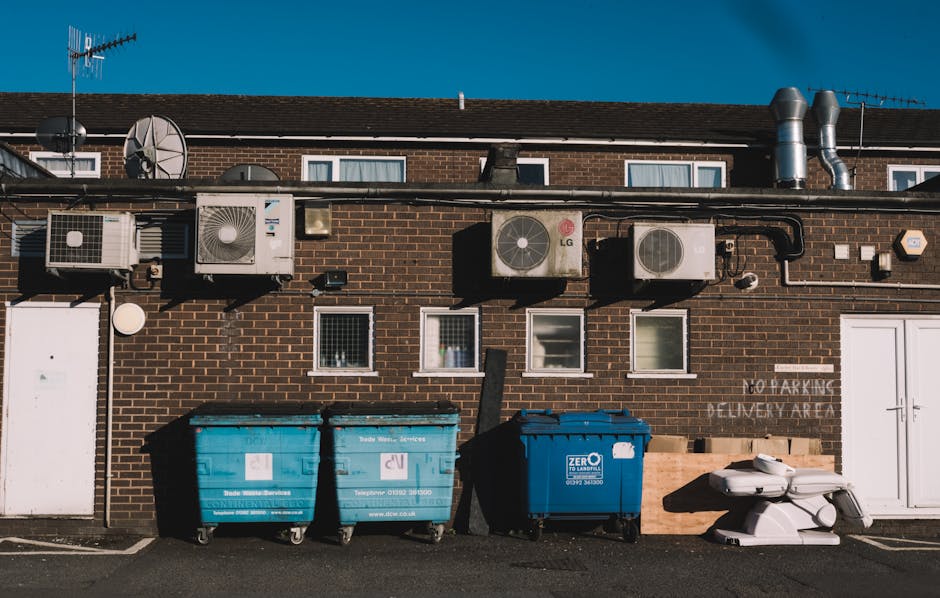
Brent Council rules for skip permits and house clearances
Posted on 26/06/2026
Brent Council rules for skip permits and house clearances: a practical guide for homeowners, landlords and movers
If you are planning a clear-out, a renovation, or a full house move, the rules around skips can trip you up faster than you might expect. Brent Council rules for skip permits and house clearances affect where a skip can go, how long it can stay, and what happens when you need waste removed from a property that is already full to the rafters. In plain English: the more organised you are, the less likely you are to run into delays, extra charges, or that awkward moment when a skip turns up and there is nowhere lawful to place it.
This guide walks through the practical side of skip permits and house clearances in Brent. You will find out when a permit is usually needed, how house clearance jobs are typically handled, what to watch for on busy London streets, and how to avoid the little mistakes that create bigger headaches later. Let's face it, no one wants waste disposal to become the stressful part of moving day.
Expert summary: If the skip will sit on a public road, assume a permit may be needed; if it stays entirely on private land, you may not need one. For house clearances, the smartest approach is to separate reusable items, hazardous materials, and general waste before anything gets booked.
Contents
- Why Brent Council rules matter
- How permits and clearances work
- Key benefits and practical advantages
- Who needs this and when it makes sense
- Step-by-step guidance
- Expert tips for better results
- Common mistakes to avoid
- Tools, resources and recommendations
- Law, compliance and best practice
- Options and comparison table
- Case study or real-world example
- Practical checklist
- Conclusion
- Frequently asked questions
Why Brent Council rules for skip permits and house clearances Matters
Skip permits are not just a box-ticking exercise. In a dense borough like Brent, they help control road safety, keep pavements accessible, and reduce the risk of blocked driveways or bins being trapped behind a container. If you place a skip on a public road without the correct permission, you can end up with enforcement issues, removal costs, or a delayed project. Not ideal when the living room is already full of packed boxes and a dismantled wardrobe.
House clearances matter for a different reason. A clearance is rarely just about taking things away. It is about sorting what can be reused, recycled, donated, or responsibly disposed of. That becomes especially important when a property contains mixed items: old furniture, broken appliances, paperwork, soft furnishings, and sometimes things that need specialist handling. A good plan saves time and avoids the classic "we'll deal with it later" pile that somehow grows overnight.
For residents in Brent, the local context also matters. Streets can be narrow, parking can be tight, and access can be awkward around school runs, refuse collection days, or busy commuter periods. If you want more local moving context, the articles on parking permit headaches in Harlesden removals and fixes and narrow access moves on Harlesden High Street are worth a look.
How Brent Council rules for skip permits and house clearances Works
The basic logic is straightforward, even if the paperwork sometimes feels a little less so. If a skip is staying on private property, such as a driveway, forecourt, or other private land, the permit requirement is usually different from a skip placed on a public highway. A highway location usually means a permit or similar approval is needed through the relevant local authority process. The exact process and timing can vary, so it is always wise to confirm details before booking.
House clearances work differently. Instead of placing a container outside and filling it yourself, a clearance team removes items directly from the property. That can be the better choice when you are clearing multiple rooms, dealing with bulky furniture, or working to a deadline. It is also often easier if there are stairs, awkward corridors, or a mix of items that need sorting before disposal.
In practice, many people use one of three approaches:
- Skip hire with permit support for DIY loading over a few days.
- Full or partial house clearance when the property needs a more hands-off service.
- Combined moving and clearance planning when a house move and declutter happen at the same time.
A useful way to think about it is this: if you are confident loading waste yourself and have suitable space, a skip can be efficient. If not, a clearance service can save a surprising amount of back strain and decision fatigue. Truth be told, those are both real resources during a move.
If your project includes sorting items before they are moved or removed, you may also find essential decluttering tips useful, especially if you are trying to reduce waste before the removal day arrives.
What counts as a skip permit situation?
Usually, the trigger is simple: the skip sits on a public road, pavement, or another shared space. That can include locations where part of the skip would overhang the carriageway or block pedestrian routes. If the container is entirely within private land, the rules may be different, but it is still sensible to check access, ground strength, and clearance for delivery vehicles.
What makes house clearances different from skip hire?
Skip hire is about temporary storage for waste you load yourself. House clearance is about removal service, labour, sorting, and disposal. Some people assume the cheapest option is always the skip, but that is not always true once loading time, permit needs, parking difficulties, and multiple trips are taken into account.
Key Benefits and Practical Advantages
Getting the rules right can make a project far smoother than people expect. The biggest benefit is time. When you know where waste can sit, how long it can stay there, and who is responsible for what, the job becomes manageable. You also avoid the kind of last-minute panic that appears around 4 pm on a Friday when the skip lorry is due and the street is suddenly full of parked cars.
Another practical advantage is better cost control. A clear plan helps you avoid paying for unnecessary storage time, failed deliveries, or repeated collection attempts. House clearances also become more efficient when items are grouped properly before the team arrives. Reusable items, recycling loads, and general waste do not need to be mixed into one huge, confusing heap. That sort of thing wastes time and, frankly, patience.
There is also a safety angle. Broken glass, heavy wardrobes, fridges, and mattress disposal all bring different risks. If you separate items sensibly, you reduce the chance of injury and protect floors, stairs, and door frames. For moving heavier pieces safely, the articles on lifting heavy items with ease and kinetic lifting offer helpful background in plain language.
And then there is the emotional benefit, which people sometimes underestimate. A proper clearance can make a property feel lighter and more usable almost immediately. You notice it when the clutter goes. The room sounds different. A bit less echoey, oddly enough.
Who This Is For and When It Makes Sense
This topic is relevant to a wide mix of people, not just homeowners with a loft full of long-forgotten furniture. In Brent, skip permits and house clearances matter if you are moving home, refurbishing a flat, managing a rental property, emptying a relative's home, or dealing with post-tenancy waste. They also matter if you are clearing a garage, a shed, or a property before sale.
It makes sense to think about skip permits and clearance support when:
- the property does not have enough private space for a skip;
- the house contains bulky or mixed waste;
- you are working to a tight moving deadline;
- access is awkward, such as narrow frontages or limited on-street parking;
- you want to separate recyclable and reusable items properly;
- you are managing a clear-out alongside a house move or tenancy changeover.
If you are moving out of a flat, you may need a more flexible plan because communal access, stairwells, and parking restrictions can make a skip less practical. That is where services like flat removals and man and van support can work well alongside clearance planning.
For student renters, the problem is often speed rather than volume. A few beds, a desk, some kitchen clutter, and a pile of old boxes can become a big task very quickly. In those cases, a tight schedule and simple sorting system matter more than trying to overcomplicate the job.
Step-by-Step Guidance
Here is the practical sequence I would recommend for most Brent clear-outs and skip-related jobs.
- List what is staying, going, recycling, or donating. Do this room by room. It is slower than grabbing bags and rushing ahead, but it prevents accidental waste and duplicate effort.
- Check whether the skip will sit on private land or public land. That single question often determines whether a permit route needs to be followed.
- Measure access properly. Look at gate widths, low branches, parked cars, basement steps, and turning space for delivery vehicles.
- Separate hazardous or restricted items early. Paint, chemicals, gas canisters, batteries, and some electrical items may need specific handling. Do not assume they can all go in one container.
- Decide whether DIY loading is realistic. If not, a clearance team may actually be the calmer option.
- Book in the right order. If you are moving house, schedule clearance before final cleaning, but after you have removed the things you still need.
- Leave a final sweep for the end. Check lofts, under beds, inside cupboards, and behind appliances. Those little overlooked spaces are sneaky.
A small but important tip: if you are disposing of bulky items, it can help to read bulky waste removal options in Harlesden before booking anything. It will give you a better feel for the sort of items that often need more than a standard bin collection.
A simple order for a house clearance day
1. Start with top-floor or least-used rooms.
2. Remove obviously reusable items first.
3. Tackle large furniture before small loose items.
4. Sweep through cupboards, sheds, and storage spaces last.
5. Finish with bagged general waste and a final site check.
Expert Tips for Better Results
The best results usually come from small, boring-sounding decisions made early. That is not glamorous, but it works.
First, avoid guessing about access. If a lorry cannot reach the property comfortably, everything slows down. On tighter streets, parking and turning space matter as much as the waste itself. For local context, removal routes for Acton Lane and Craven Park Road NW10 is a useful local read.
Second, keep reusable items separate. A sofa with life left in it does not need to be buried under broken shelves and old bathroom fittings. The more you sort beforehand, the easier it is to divert items into the right route. If you are storing useful belongings during the process, storage options in Harlesden may also be worth considering.
Third, protect surfaces. Hallways, stair edges, and front steps get battered during clearances. I have seen a rushed clearance turn into a scratched banister situation that nobody was happy about. A few sheets, blankets, or simple protective materials can make a real difference.
Fourth, keep children and pets away from the work zone. Sounds obvious. Still worth saying. Moving furniture, metal edges, and loose debris can create avoidable risk.
Fifth, think about the end of the job, not just the start. A clearance that leaves the property half-sorted is rarely satisfying. Plan for the cleaning stage too, perhaps with essential steps for thorough house cleaning before you move if you are preparing to hand over keys.
Common Mistakes to Avoid
Most problems with skip permits and house clearances are not dramatic. They are ordinary mistakes made in a hurry.
- Booking a skip before checking the location. A public-road skip and a private-drive skip are not the same thing.
- Underestimating how much waste you have. Two rooms become six bags, then twelve, and somehow there is still more in the shed.
- Mixing restricted items into general waste. That creates disposal issues and can slow the entire job.
- Leaving access planning until the day before. Parking restrictions and narrow roads are not the sort of thing that sort themselves out magically.
- Forgetting about mattress, sofa, or appliance handling. These items often need extra care or separate routing.
- Not cleaning as you go. If you wait until the end to check every room, you may discover leftover items after the clearance team has already packed up.
One of the most common errors, to be fair, is assuming "it'll be fine" about on-street placement. Sometimes it is fine. Sometimes it is not. That uncertainty is exactly why checking the details early saves so much hassle.
Tools, Resources and Recommendations
You do not need a truck full of specialist gear, but a few tools make the process much easier.
- Room-by-room inventory sheet for sorting what stays and what goes.
- Permanent marker and labels for marking boxes or bags.
- Sturdy gloves for handling sharp or dusty items.
- Furniture blankets and tape to protect items that are being moved or stored.
- Basic measuring tape for access checks, especially on tight streets.
- Dust sheets or floor protection for internal clearance routes.
- Rubbish sacks and recycling bags for separating smaller waste streams.
For packing support ahead of a clearance, essential packing tips for a stress-free house move is a sensible companion read. If the job is part of a full move, the broader advice in moving without stress can help you keep the pace steady rather than frantic.
Where furniture is involved, the pages on furniture removals and house removals are useful if you want a clearer picture of how belongings can be moved out before or after the clearance stage. If you are comparing service formats, the services overview can help you understand the broader options without overcommitting too early.
Law, Compliance, Standards, or Best Practice
When skip permits and house clearances are involved, compliance is mainly about responsible placement, safe handling, and proper disposal. In the UK, waste should be transferred only to appropriate carriers and handled in a way that does not create a nuisance, hazard, or obstruction. You do not need to become a legal expert to do this well, but you should treat the process as more than simple rubbish removal.
Best practice usually means:
- checking whether the skip sits on public or private land;
- keeping access routes clear for pedestrians and emergency use;
- not overfilling containers beyond safe limits;
- separating recyclable items where practical;
- keeping hazardous or special waste out of general waste streams;
- using insured, experienced handlers for bulky or awkward items;
- documenting what has been removed if you are a landlord, agent, or executor.
If you are managing a rental turnover, professional standards matter even more. You want the property to be left clear, safe, and ready for its next stage. That is where reliability, insurance, and a proper paper trail all start to matter. For extra reassurance around handling and safeguards, the pages on insurance and safety and health and safety policy are useful supporting reads.
A small but useful note: if an item could be reused, donated, or repurposed, it is usually better to pause before sending it to mixed waste. That tiny pause can save money and reduce landfill pressure. Win-win, really.
Options, Methods, or Comparison Table
Choosing between skip hire and house clearance often comes down to access, time, labour, and the mix of items you need removed. This table gives a simple side-by-side view.
| Method | Best for | Advantages | Watch-outs |
|---|---|---|---|
| Skip hire | DIY clear-outs, ongoing renovation waste, flexible loading over several days | Useful if you want to work at your own pace; straightforward for mixed general waste | May need a permit if placed on public land; loading takes time and effort |
| House clearance | Full-property clear-outs, probate, end-of-tenancy, bulky furniture removal | Less manual labour; faster for large volumes; good for awkward items | Needs clear access and good sorting; pricing can vary by volume and item type |
| Combined approach | Moves where some items stay, some go, and some are stored | Flexible and efficient; good for staged downsizing | Requires careful planning so items do not get mixed up |
For many Brent households, the combined approach is the sweet spot. You clear what is definitely going, move what is staying, and place the "maybe" items into temporary storage. It sounds simple because, usually, it is.
Case Study or Real-World Example
Here is a typical scenario. A couple in Brent are moving from a two-bedroom flat into a smaller place nearby. The flat has a bulky wardrobe, two old bedside cabinets, a broken desk chair, some boxed books, and a freezer that has to be emptied properly. They first sort the items into four groups: keep, sell/donate, recycle, and dispose. That takes an evening and a bit of tea, nothing more dramatic.
At first, they consider booking a skip on the street. Then they realise the road outside is narrow and parking is already tight by late morning. Rather than pushing ahead and hoping for the best, they check their access options, confirm where the items can be placed, and choose a more practical combination of clearance and removal support. The wardrobe goes out safely, the reusable items are kept back, and the general waste is handled without blocking neighbours or creating a roadside pile-up.
The result? Less stress, fewer trips, and no last-minute argument over where a skip can stand. Not glamorous. Very effective.
That sort of job is also where a local, flexible move plan helps, especially if you are working within a tight schedule. If the moving side of the process is equally compressed, the advice in last-minute Harlesden moves and same-day van availability tips can help you think ahead rather than react late.
Practical Checklist
Use this checklist before you book anything.
- Confirm whether the skip will be on public or private land.
- Measure gates, pathways, stairs, and parking access.
- List bulky items separately from bagged waste.
- Identify anything hazardous, electrical, or restricted.
- Decide what will be kept, stored, sold, donated, or discarded.
- Check whether your clearance needs to happen before or after moving day.
- Protect floors, bannisters, and entrance points.
- Plan for final cleaning after all waste has been removed.
- Keep keys, building access codes, and contact numbers ready.
- Leave time for a final room-by-room sweep.
If you are decluttering as part of the move, it can also help to review a moving checklist for Harlesden residents. Local checklists tend to be the ones people actually use, probably because they feel less abstract and a bit more real.
Conclusion
Brent Council rules for skip permits and house clearances are really about planning, access, and responsibility. Get those three right and the job becomes much simpler. Get them wrong and even a small clear-out can turn into a costly, messy delay. The good news is that most issues are avoidable with a little preparation: check where the skip will sit, sort your waste early, protect the property, and choose the right removal method for the kind of clearance you actually need.
Whether you are clearing a flat, managing a move, or dealing with bulky household waste, the safest path is usually the most organised one. Small steps make a big difference here. A tape measure, a sorting plan, and one calm decision at a time-honestly, that is most of the battle.
If you are ready to take the next step, compare your options, prepare your rooms, and keep the process as simple as you can. A tidy clearance has a nice way of making everything else feel lighter too.
Get a free quote today and see how much you can save.